
insurance after accidents
Should I Talk to the Insurance Adjuster After an Injury?
PUBLISHED JUNE 17, 2026 · UPDATED JULY 13, 2026 · INSURANCE AFTER ACCIDENTS
Direct answer
Should I Talk to the Insurance Adjuster After an Injury?
You generally need to cooperate with your own insurer under your policy, and you should always be honest and accurate. With the other party's insurer, you are generally not required to give a recorded statement, and many people consider speaking with an attorney before doing so, especially while their injuries are still being evaluated.
Two insurers, two different relationships
After an accident, calls can come from two directions: your own insurance company and the other party's. These are not the same conversation. Your policy is a contract that typically requires you to report the crash and cooperate with your insurer's investigation. The other driver's insurer has no contract with you; its adjuster works for the other side of the claim. Being clear about which company is calling, and writing down the caller's name, company, and claim number every single time the phone rings, is the simplest way to keep your footing in the weeks ahead.
Talking with your own insurer
Report the accident to your own insurer promptly, as your policy requires, and give accurate, factual answers. Stick to what you directly know: where, when, the vehicles involved, and visible damage. It is fine to say you do not know or that something is still being determined, particularly about injuries that are still being evaluated. Never minimize symptoms to seem agreeable, and never speculate about fault or speed. Honest cooperation with your own insurer is both required and in your interest; guessing is neither.
The other party's adjuster and recorded statements
The other driver's insurer may call quickly, sometimes within days, and ask for a recorded statement. You are generally not required to provide one to another party's insurer, and you can take time before deciding. Recorded statements are transcribed and can be compared against every later account you give; an innocent early guess about speed or an offhand remark that you feel fine can resurface months later. Many people consider speaking with an attorney before giving any recorded statement, which is a normal and unremarkable step.
Why the early days are a hard time to give statements
Adjusters often reach out while facts are still forming. You may not yet have a repair estimate, a complete diagnosis, or a sense of how long recovery will take. A statement given in that window locks in a snapshot that may understate what actually happened to you, since some symptoms surface late and some vehicle damage is found only during repair. There is nothing dishonest about declining to characterize your injuries until a qualified medical professional has evaluated you. Accuracy sometimes requires patience.
Quick settlement offers and releases
An early offer to settle, sometimes paired with a friendly deadline, deserves careful thought. Settlements are typically final: signing a release generally ends the claim, including for injuries or costs discovered afterward. Before accepting anything, consider whether your medical evaluation is complete, whether you understand all your accident-related costs so far, and whether future treatment is possible. Having an attorney review an offer before you sign is a common step. No one can tell you what your claim is worth from a phone call, and this site will not guess either.
Practical habits for every insurance conversation
A few habits make all of this manageable. Keep a log of every call, letter, and email: date, person, company, and what was said. Ask for requests in writing when you can. Do not sign broad medical-record authorizations from another party's insurer without understanding their scope, since they can reach far beyond the accident. Answer only what is asked, without volunteering theories. And be consistently truthful; never misstate or embellish anything to any insurer, because honesty protects your claim as much as caution does.
If the calls feel like too much
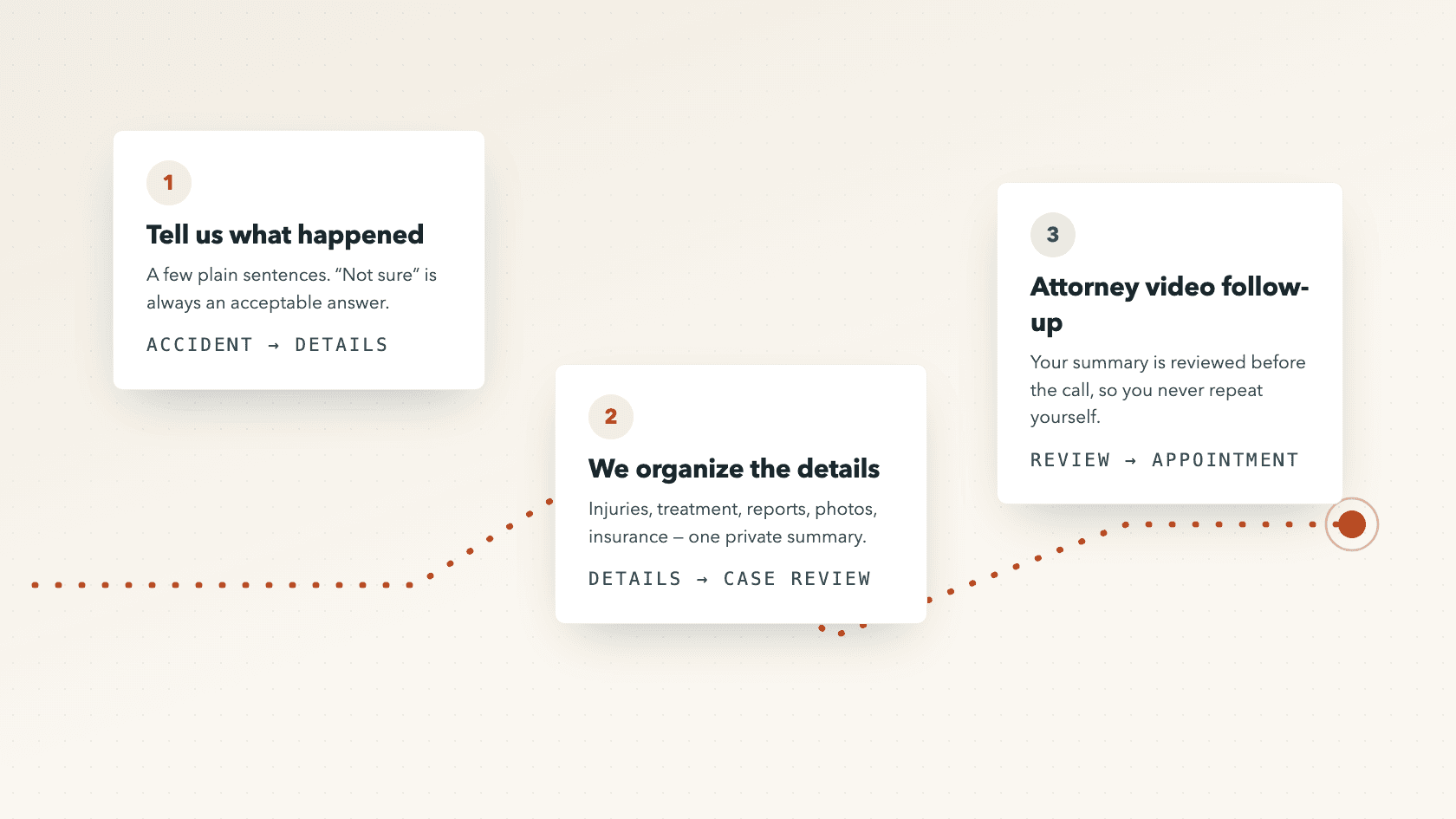
Many people simply do not want to manage adjuster conversations while recovering, and handing that role to a professional is one of the main practical reasons people hire attorneys. If you want your situation looked at first, you can start a private case review at /case-review; you describe what happened, the details are organized for a California personal injury attorney, and video follow-up can be scheduled afterward. This site provides legal information and attorney advertising, not legal advice.
Common questions
Can I just ignore the other insurer's calls forever?
Avoiding the process indefinitely is not a strategy, and this site does not suggest ignoring insurers. The claim still needs to be handled, by you or by an attorney on your behalf. Declining a recorded statement while you consider your options is different from ignoring the claim.
What if I already gave a recorded statement?
It happens often and is rarely fatal to a claim. Write down what you remember saying and when, request a copy if one is available, and mention it during any attorney review so it can be taken into account.
When should I get my specific California injury situation reviewed?
Consider an attorney review when anyone was injured, symptoms are changing, fault or insurance coverage is disputed, several parties may be involved, important evidence may disappear, or you are unsure which legal deadline applies. A review should address your facts rather than relying only on general information.