
evidence after accidents
What Information Should I Collect After an Accident?
PUBLISHED JUNE 12, 2026 · UPDATED JULY 13, 2026 · EVIDENCE AFTER ACCIDENTS
Direct answer
What Information Should I Collect After an Accident?
After a California accident, collect the other parties' contact, license, and insurance details, photos and video of the scene and vehicles, witness names and numbers, any police report information, all medical records and bills, and a running log of expenses and missed work. Organized records support both insurance claims and attorney review.
Why documentation matters so much
Injury claims are decided on evidence, and most of the evidence in an accident case exists in the first days and then starts to disappear. Vehicles get repaired, skid marks fade, camera footage is overwritten, witnesses move on, and memories soften. Collecting information early does not commit you to any claim; it simply preserves your options. Think of it as keeping the record accurate while it is still easy to do, so that whatever you decide later rests on facts rather than reconstruction.
At the scene: people and vehicles
For every driver involved, record their name, phone number, driver license number, license plate, and insurance company and policy number. Photograph their insurance card and license if they allow it, which prevents transcription errors when you copy details by hand under stress. Note the make, model, and color of each vehicle, the direction each was traveling, and whether any vehicle was a commercial truck, rideshare, delivery van, or government vehicle, since those details can change which insurance applies. If you are too hurt to do this, a passenger or bystander can help, or the police report may capture it.
Photos and video, generously
Storage is cheap and moments are unrepeatable, so photograph more than feels necessary. Capture all vehicles from multiple angles, close-ups of damage, the wider scene showing lane positions, traffic signals and signs, road conditions, weather, debris, and any visible injuries. A slow video walk around the scene can capture context photos miss. Afterward, photograph your injuries as they evolve, because bruising and swelling often look most significant days later. Back the files up somewhere safe the same week.
Witnesses and official reports
Independent witnesses can matter enormously when accounts conflict, and they are the hardest thing to recover later. Ask anyone who saw the crash for a name and phone number, and note where they were standing. If police responded, write down the officers' names, agency, and the report or incident number, and find out how to request the report. If the crash happened near businesses or homes, note any cameras you can see; footage retention can be short, so an early, polite request, or an attorney's request, may preserve it.
Medical records from day one
Your medical records are usually the backbone of an injury claim. Keep every visit summary, referral, imaging report, prescription, and bill, starting with the first evaluation after the crash. Tell each provider that your symptoms relate to an accident so the connection appears in the chart. A simple symptom journal, a few lines a day about pain, sleep, mobility, and mood, adds a human record that medical charts do not capture. If symptoms appeared late, document when they started and when you sought care.
Money, time, and the ripple effects
Losses extend beyond the emergency room. Keep receipts for medications, medical equipment, transportation to appointments, and help you had to hire, such as childcare or house cleaning. Track missed work precisely: dates, hours, and how pay was affected, along with used sick leave or vacation time. If the injury limits activities you normally do, note that too. A running spreadsheet or notebook, updated weekly while events are fresh, is far more reliable than trying to reconstruct months of scattered disruption from memory long after the fact.
Keep it organized and take the next step
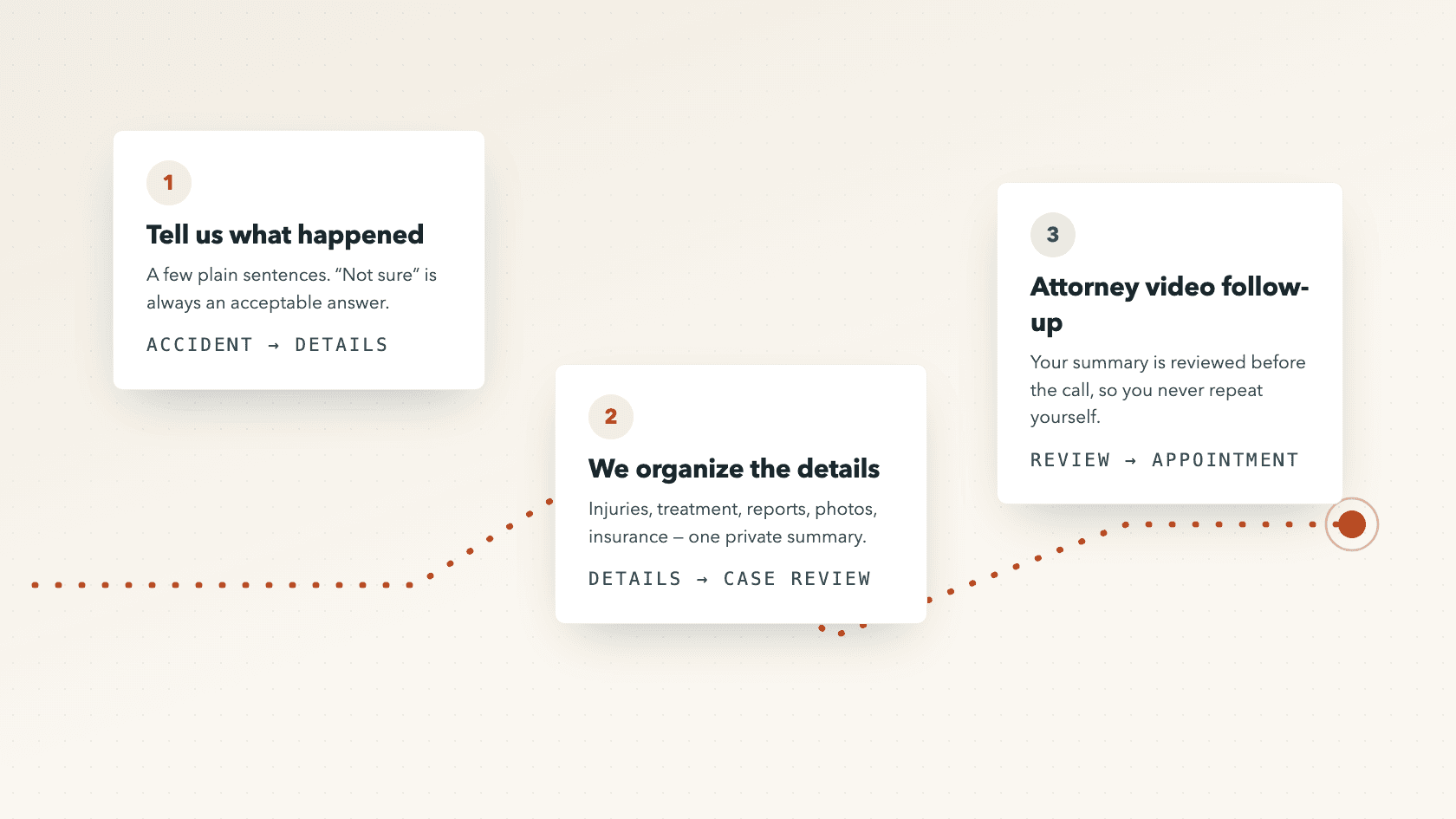
A single folder, physical or digital, holding everything in date order will serve you well no matter what you decide. The full checklist at /evidence-checklist is designed to be worked through over a few days, not an afternoon. When you want a professional look at what you have, you can start a private case review at /case-review; your information is organized for a California personal injury attorney, and video follow-up can be scheduled afterward. This site provides legal information and attorney advertising, not legal advice.
Common questions
I did not collect anything at the scene. Is it too late?
No. Start now with what exists: your medical records, photos of your injuries and vehicle, the police report if there is one, and your written recollection of the crash while it is fresh. Attorneys regularly work with imperfect records.
Should I give my collected evidence to the other driver's insurer?
You are generally not obligated to hand your documentation to another party's insurer on request. Consider speaking with an attorney about what to share, with whom, and when, since disclosure decisions can affect a claim.
When should I get my specific California injury situation reviewed?
Consider an attorney review when anyone was injured, symptoms are changing, fault or insurance coverage is disputed, several parties may be involved, important evidence may disappear, or you are unsure which legal deadline applies. A review should address your facts rather than relying only on general information.